


Technology is transforming the future of furniture design and retail. From AI-powered product development and customizable furniture systems to augmented reality shopping experiences and smart furniture integration, the industry is rapidly evolving. Modern consumers expect more than style — they want innovation, functionality, and seamless digital experiences. At Vaya Home, we explore how furniture technology, data-driven design, and immersive online retail are reshaping how furniture is created, purchased, and experienced in 2026 and beyond.
The furniture industry is undergoing one of the most significant transformations in its history. What was once a field driven primarily by craftsmanship and showroom experience is now being reshaped by artificial intelligence, augmented reality, smart technology, and data-driven retail systems.
Technology in furniture design is no longer experimental — it is strategic. From how products are developed to how customers shop online, digital integration is redefining what modern furniture brands must offer.
At Vaya Home, understanding this shift is essential. The future of furniture is not just about style and comfort — it is about how intelligently design, technology, and retail experiences come together.
The Rise of AI in Furniture Design
Artificial intelligence is becoming a powerful tool inside contemporary design studios. Rather than replacing designers, AI enhances creative decision-making and technical precision.
Today, AI in furniture design is used to optimize ergonomics, improve structural integrity, reduce material waste, and generate variations of a product in minutes instead of weeks. Designers can input constraints such as dimensions, sustainability goals, or weight limits, and advanced modeling systems produce optimized forms that meet those parameters.
This shift is accelerating innovation while lowering production costs. It also supports sustainable furniture development by minimizing excess materials and unnecessary prototyping.
For brands focused on long-term quality — like Vaya Home — these technological advancements represent an opportunity to create pieces that are not only visually refined but intelligently engineered.
Customizable Furniture and Parametric Design
One of the biggest changes in digital furniture retail is the rise of mass customization. Consumers no longer want to choose from a limited set of fixed models. They want furniture that adapts to their space, lifestyle, and aesthetic.
Companies such as Tylko have built entire systems around algorithm-driven customization. Their technology allows customers to configure shelving dimensions in real time, with production files generated instantly.

This model reflects a broader shift across the industry: from standardized inventory to adaptable systems. Customizable furniture is becoming more accessible because digital design tools make it scalable.
For modern furniture brands, this means thinking beyond individual products and toward modular systems that evolve with the customer’s needs.
Augmented Reality: Changing How Customers Shop for Furniture
One of the biggest barriers in online furniture shopping has always been uncertainty. Customers hesitate because they cannot physically see how a piece will look or fit in their space.
Augmented reality (AR) is solving this problem.
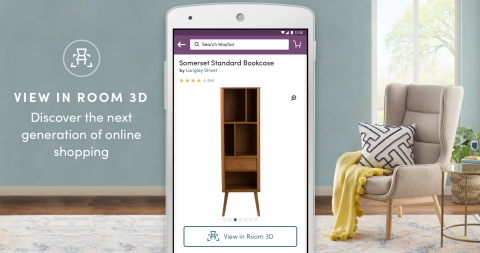
Major retailers like IKEA and Wayfair now offer AR tools that allow shoppers to place full-scale digital models of furniture inside their homes using a smartphone.

This technology dramatically reduces purchase hesitation and return rates. It builds buyer confidence by turning imagination into visualization.
For brands operating in the digital furniture space, immersive shopping experiences are quickly becoming expected rather than optional. As AR technology becomes more widespread, customers will naturally gravitate toward companies that make online buying feel tangible and interactive.
Smart Furniture and Integrated Technology
Beyond design and retail, technology is increasingly embedded directly into furniture itself.
Smart furniture now includes built-in wireless charging, hidden cable systems, adjustable height mechanisms, posture-support systems, and integrated lighting. As hybrid work continues to shape modern living spaces, functional design is becoming more important than ever.
Consumers want furniture that supports their digital lifestyle. A desk is no longer just a desk — it is a workstation ecosystem. A bedside table may include charging ports. A media console may manage connectivity.

This evolution reflects a deeper change in expectations. Furniture is no longer static; it interacts with daily life.
Data-Driven Furniture Retail and Supply Chains
Technology is also reshaping how furniture businesses operate behind the scenes. Advanced analytics now help predict purchasing trends, optimize inventory management, and reduce overproduction.
Digital supply chain tools allow brands to forecast demand more accurately, minimizing waste and improving delivery times. This is particularly important in an industry historically known for long production cycles and excess inventory.
Sustainability and efficiency increasingly depend on these digital systems. The smarter the data, the more responsible the production process.
For furniture brands committed to quality and longevity, this creates a more resilient and forward-thinking business model.
The Future of Digital Furniture Experiences
The future of furniture retail lies in seamless integration between physical and digital environments. Showrooms are evolving into interactive spaces that combine tactile experience with digital configuration tools. Online platforms are becoming immersive, offering 3D previews, customization interfaces, and real-time support.
The most successful brands in 2026 will not be those that rely solely on aesthetics. They will be those that integrate technology to improve design precision, enhance customer confidence, and streamline production.
For Vaya Home, staying aligned with these innovations means embracing technology not as a trend, but as a foundation for modern furniture design. The goal is not simply to follow digital transformation — it is to use it intelligently to create better products and better experiences.
Final Thoughts: Where Furniture Is Heading
Technology is no longer separate from furniture design. It is embedded in how products are imagined, manufactured, marketed, and experienced.
Artificial intelligence enables smarter design. Augmented reality enhances online furniture shopping. Smart integrations improve daily functionality. Data systems refine sustainability and logistics.
The industry is moving toward furniture as an interconnected system rather than isolated objects.
Brands that understand this shift will define the next decade of design.
And customers will expect nothing less.